
Giving Birth without Epidural (Yes, it’s possible!)
This post is all about the best tips to give birth without epidural.
With nearly 73% of women using epidurals during labor in the U.S., it is no wonder women are wondering things like: how painful is natural birth without epidural, what the best way to give birth without pain naturally, and how to give birth without tearing.
These are the same questions I had when I was pregnant with my second baby and was considering a natural birth.
I knew my body was capable, but after my first childbirth experience, I thought there was NO WAY I could take that much pain and more if I wanted to go with an unmedicated birth.
Even though with my first, I opted out of an epidural, I was given a super strong narcotic through my IV that took away all of my pain. I’m not exaggerating; to the point that I didn’t even know when I was having contractions. The OB nurses knew more about my contractions than I did, only because they had a monitor to tell them. Meanwhile, I was clueless.
I’m happy to share that I was able to have my natural unmedicated birth with my second daughter, and it was amazing. The process was not an easy one, but I would do it again in a heartbeat.
My goal in this article is to equip you with natural birth tips that actually work so that you, too, can achieve your dream natural birth, fearlessly and with grace.
Helpful Tips for a Birth without Epidural
1. Know the Difference: Epidural vs. Natural Birth
First and foremost, it is important to know your WHY.
One thing that helps solidify your decision to go through an unmedicated birth is to know the advantages of natural childbirth – and what you miss out on with an epidural.
With an epidural, although it is quite effective for pain relief, the baby misses out on four key neurotransmitters mama produces and releases during labor to better cope with labor.
- Adrenaline spaces out contractions, giving mama and baby a break in between contractions
- Cortisol helps mama and baby cope with the tension and stress of labor, especially because labor is new to the baby.
- Oxytocin naturally induces contractions while also helping baby and mama bond. Oxytocin is the infamous love/bonding hormone.
- Endorphins are your body’s natural opioids that alleviate discomfort at a biological level, as well as help with natural birth pain management (been there, they work!). Plus, endorphins are your feel-good hormones, which you get a rush of during and right after delivery – making you feel in the clouds and full of achievement.
It is important to remember that these neurotransmitters, like epidurals, cross the placenta. However, these four provide so much more benefit to your baby!
Overall, they help the baby with any discomfort (being squished in each contraction, for example) and comfort the baby with the rush of oxytocin and endorphins, so the baby never loses connection with mom and feels safe throughout labor.
2. Your Unmedicated Birth Plan
Let your plan be known!
There is nothing like keeping those in your close circle up to date to help you go through with your dream birth.
I know for me, explaining to my husband why a natural birth was my new goal and what he could do to help me made a world of difference.
Equally as important, find a provider who supports you and respects your decision to have a natural, unmedicated birth.
If your current provider does not respect your decision or does not give you the encouragement you need, do not settle!
There are plenty of obstetricians who are more than willing to support you 1000%. You do not need anyone telling you you can’t do it or making you feel any less than amazing for such a courageous vision of your birth.
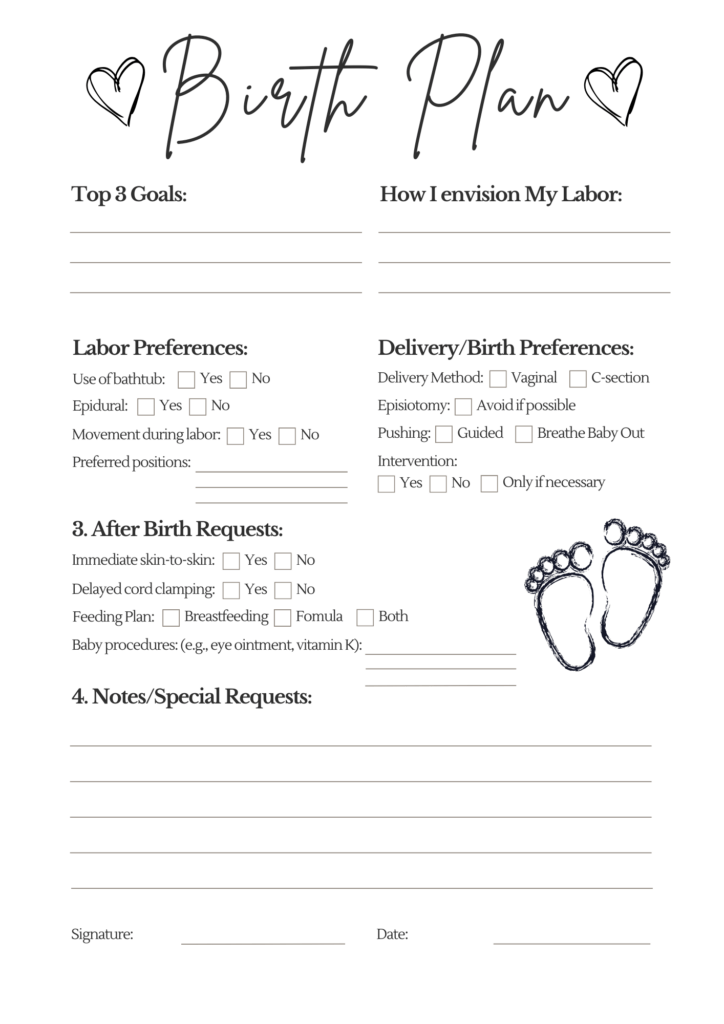
Once you do inform your close circle, including your OB, it is important to brainstorm your birth plan.
This is a great way to put your goals and thoughts on paper. I provided you with a free birth plan template above. Feel free to download your FREE Birth Plan Template here. You can keep the template as is or customize it to your needs! Don’t forget to make copies for your partner/birth support person and your doctor! Happy planning!
3. How to Prepare for a Natural Birth

One of the best ways to prepare for labor and delivery is to take prenatal classes.
Specifically, one focused on natural birth education.
The one that I took was called Built to Birth by Bridget Teyler. Such a good course. Very thorough and filled with gentle reminders of our inner strengths and capabilities as mothers. Highly recommend.
To check out the course, visit builtobirth.com.
Bridget Teyler also has a YouTube channel filled with wonderfully useful information regarding labor prep, exercises to prepare for natural childbirth, natural birth techniques, and more!
You can check out her YouTube channel by clicking here.
4. The Stages of Labor
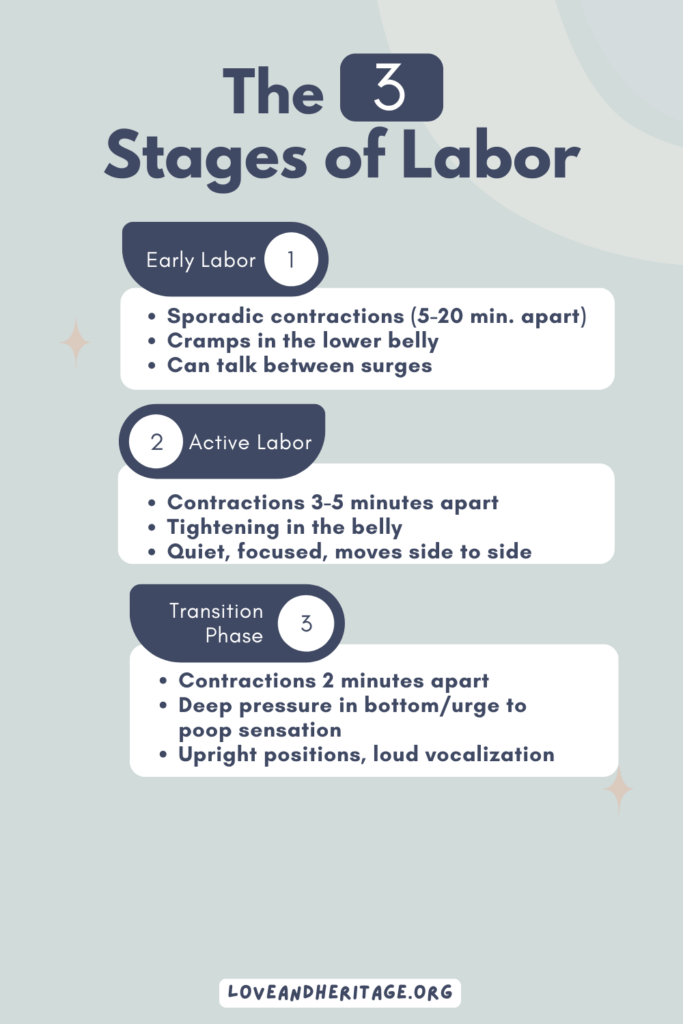
Once you do take a class geared to equip you for your upcoming birth without epidural, knowing the 3 stages of labor like the back of your hand is going to be so very helpful once your labor kicks in.
In the infographic I created above, I provide you with basic information to know for each of the three phases: early labor, active labor, and the transition phase.
Each of these phases is unique and can last different lengths of time between individuals.
What is most important is to know how far apart contractions are in each phase and how long they last, generally speaking.
Something that helped me distinguish the different phases was to relate each phase to a behavior.
For example, during the early labor stage, I was able to talk in between contractions, move around a lot more, and even finish packing our hospital bag!
During the 2nd stage of labor or the active phase, I felt a lot more tightening in my belly and found myself more focused and to myself (and that is okay!).
Man, but during the 3rd stage of labor or the transition phase, I was definitely vocalizing louder to cope with the contractions, and in between contractions, I was utilizing every second to rest and to mentally prepare for the next one.
Use the stages of labor diagram as a starting place and quick cheat sheet. Understanding labor stages will be crucial to not being caught by surprise when you go into labor. Don’t forget to inform your partner of these labor stages so they, too, can be in the loop.
5. Breathing Techniques for Labor
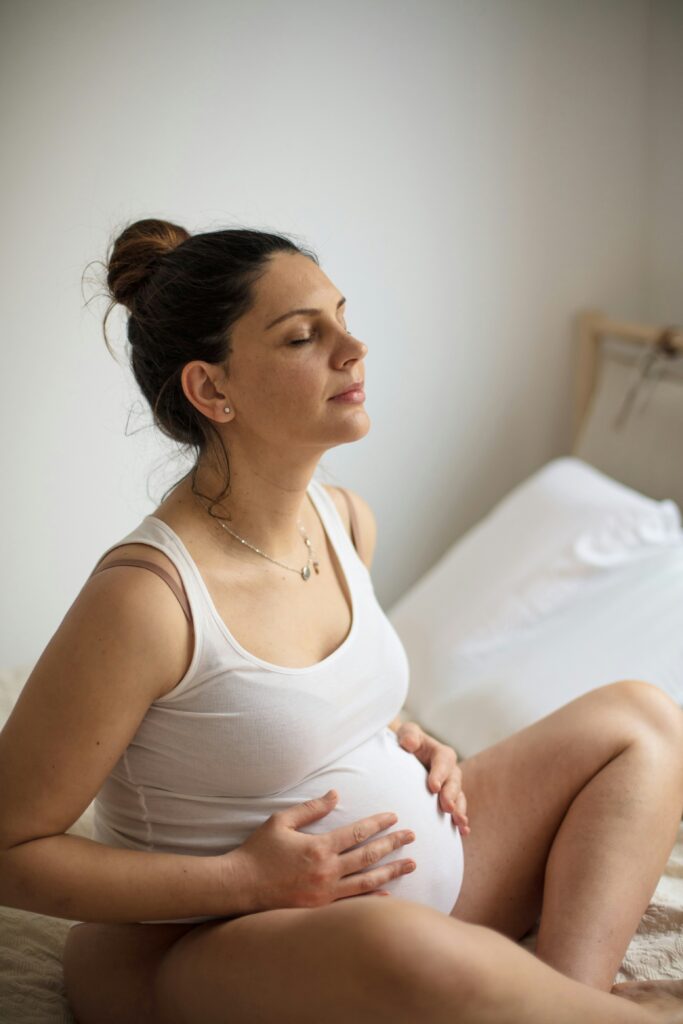
This may be a good time to share that I actually had my second daughter in the car… in the hospital parking lot, to be exact.
If you were to ask me what the one thing was that helped me through labor without a medical team/hospital staff or medication for that matter, I would say it was the labor breathing techniques I learned. Just ask my husband…
One of the most important things you can do is practice these breathing techniques for labor without epidural. There are various deep-breathing techniques for labor you can learn before the big day.
This may be one of the most important labor and delivery tips I can give you. I highly encourage you to try it.
It may be one of the most labored parts of preparation (pun intended), but it is oh, so worth it… Trust me!
Check out some of these breathing techniques for yourself in this short video:
Again… practice, practice, practice!
6. Birth Affirmations

Ah, who doesn’t love a good ol’ positive affirmation to keep us focused and feeling stronger than ever?
These seriously create a mind shift in our brains and are so powerful to remind us just how courageous we are!
If you want a calm birth and encouragement for labor and delivery, fill your space with these birth affirmations.
You can find a ton online. Just print them out and place them throughout the room, living room, etc., for an extra boost of motivation and encouragement.
You will certainly see their impact in the midst of labor, and it will give you the impulse to keep going, even when it hurts.
7. Labor at Home (for as long as you can)

Laboring at home is perhaps one of my top tips for new moms.
There is nothing quite like laboring in the comfort of your own home versus dealing with contractions and back pain in front of strangers in a waiting room.
Having done both (gone straight to the hospital and labor at home before hospital stay), I could tell you they are night and day.
Some benefits of progressing labor at home include:
- You are in the comfort of your own home. You can be barefoot or in your pajamas and go for a snack if needed.
- You could be in a quieter environment where you can focus on your labor breathing and connecting with your baby through the contractions.
- You can stay close to your support system, as they help you progress through labor at your pace.
- You reduce the risk of being sent home if you are not dilated enough. Please note, though, that you do not want to wait too long, or you run the risk of having your baby at home or on the way to the hospital.
If you are wondering how to progress labor at home without it becoming too stressful or risky, keep reading. We will go over that in the next section.
8. Comfort Measures for Labor

This is one of my personal favorite parts of labor – the comfort measures for labor. In this section, a meaty one if I may add, I will provide you with comfort measures examples and some tips on how to relax during labor before your hospital birth.
The biggest question when it comes to labor is how to get through natural labor, and my answer to that is: through labor coping techniques that help with pain management.
The truth is, unmedicated births are painful. I am not going to sugarcoat it because the truth is, contractions become all-consuming at some point. However, contractions do not start that intensely, though still painful, and there are a handful of things we can do to get through the various labor pains with more grace.
One of my biggest pieces of labor advice is to do everything in your power to conserve your energy, especially in the first two stages of labor.
There is nothing quite like the 3rd stage of labor, also known as the transition phase, but early labor and active labor are very manageable with the right measures.
Some of these measures include:
- Hiring doula services for extra support
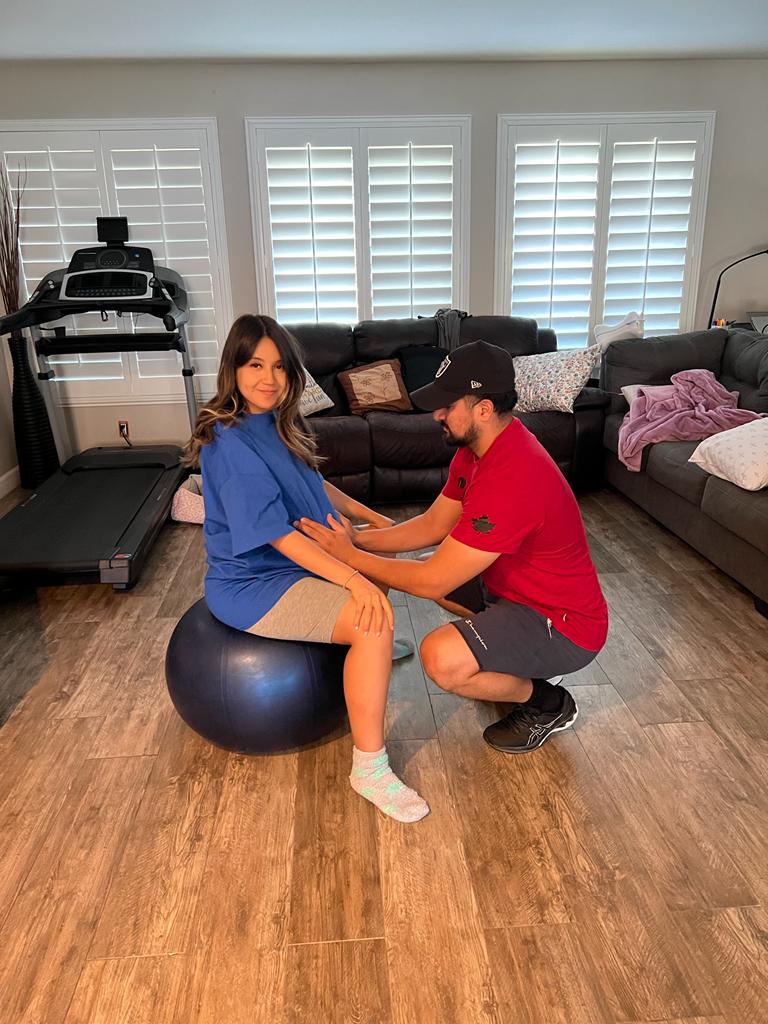
- Using a birthing ball during labor (also known as a medicine ball) in between contractions. This is good for pain relief, rest, as a distraction, and to encourage baby to move down the pelvis on her own. Here is the exact birth ball I used (and I swear by it!).
- Water therapy. Countless women experience tremendous relief getting into a bathtub filled with water to take the edge off of the contractions. Although I have never used this method, I have close friends who have and swear by it.
- Rocking back and forth during a contraction. Movement helps distract the body from painful contractions and keeps your body warm. This is one of my main methods to get through my labor stages. With my second baby, I labored at home between 11 pm and 3 am by myself, and one of my most comforting measures was to go against a wall for support and rock from side to side when a contraction hit.
- Receive counter-pressure from your doula or support person. This helps sooo much. By the time I reached the transition phase of labor and right before delivering my baby, my husband really came through with counter-pressure on my hips. It truly is helpful.
- Create a calm, relaxing labor space for yourself. This one also goes a long way. Have your favorite playlist playing softly in the background, worship music, or your favorite meditations. This may not seem significant, but it makes a huge difference in your mood and overall stamina. Be sure to take your speaker with you so you can play relaxing music at the hospital, if you choose, to help you through the last stages of labor.
- Take a nap… Yes, you read that right. In fact, it is one of the best things you can do for your labor’s progress. I personally did this during the 1st stage of labor and the 2nd stage of labor, and not only did I get more zzz’s in before baby’s arrival, but it literally is the perfect pain killer because when you are asleep, you do not feel pain – until you wake up, of course.
- Special note on taking naps during labor: I took three naps while I was in my early phase of labor (contractions 7-10 minutes apart, to be exact) and after my last nap, I woke up ready to push with contractions only 2 mintues apart and labor progressed FAST after that… hence, why I ended up having my daughter in the front seat of my Camry, in the hospital parking lot. So please, be aware that naps have the potential to speed labor like crazy! Not everyone will experience this, but I just thought I’d give you the fair warning I wish I had gotten.
- Vocalizations. Here we reintroduce breathing techniques. Between movement, whether that is on a medicine ball or rocking back and forth, taking cat naps here and there, and breathing with high intentionality for pain management, you are golden. The closer you are to meeting your baby, the higher-pitched these vocalizations naturally become. And for me, the louder, the more soothing.
There are many other comfort measures out there, but these are some of my personal favorites.
9. Your Birth Partner
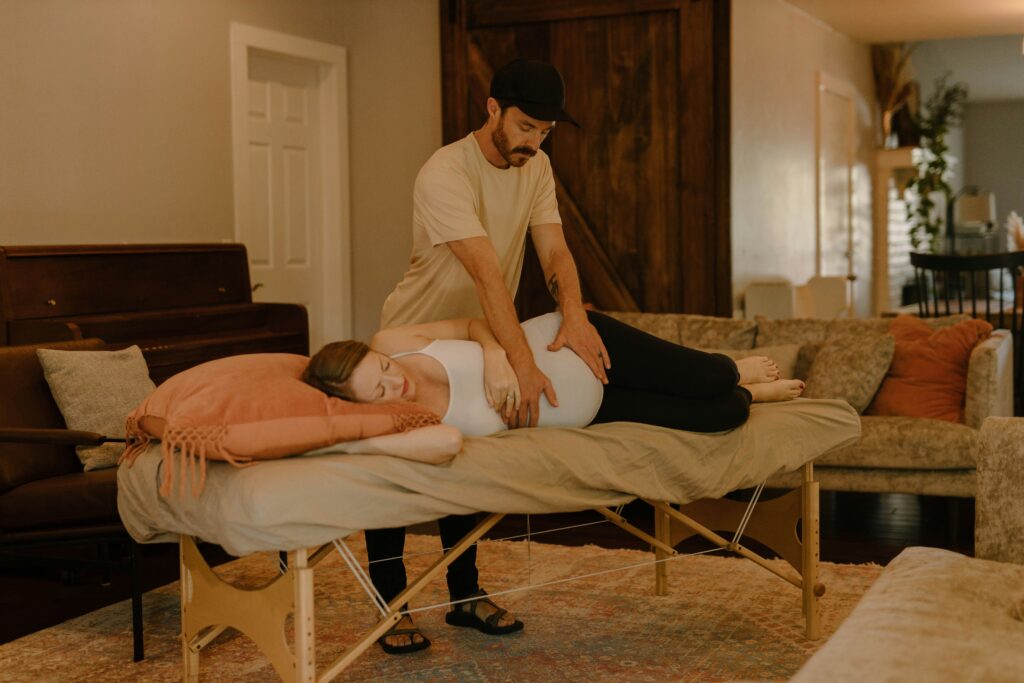
Having a birth partner, especially one who has some basic knowledge on what to do and what not to do, is soo helpful. Even though it is not required for a successful birth, but having a strong support system can make all the difference. Just receiving some counter-pressure and a massage here and there goes a long way in my opinion.
Make sure your birth partner is also aware of your birth plan to make sure everyone is on the same page.
A birth partner can also help with things like carrying the hospital bags and driving you to the hospital so you and baby get there safely.
10. Childbirth Positions

Becoming knowledgeable of all the birthing position options out there is not only empowering but also wise. In the event delivery gets difficult, having a few other positions up your sleeve could really come in clutch.
Some common childbirth positions are:
- The standing birth position
- The squatting birth position
- The side lying birth position
- The kneeling birth position
- The upright birth position
As you can see, you have a plethora of options. Below is a link to a diagram to help visualize some of these birth positions:
https://mamamule.blogspot.com/2017/03/the-visual-birth-plan-from-positive.html
As you can see, the ways to get through natural birth are endless and at your fingertips! Don’t be afraid and keep pushing forward (no pun intended). I am rooting for you!