16 Breastfeeding Essentials for First-time Mommas
I remember how daunting the sheer thought of breastfeeding was for me as an expecting momma.
Throughout my first pregnancy I hoped for the best outcome, not keeping my hopes to high just in case. I was constantly wondering if there was anything I could do while pregnant to increase my chances of breastfeeding my baby. Yet, I didn’t know where to start or how soon I could start prepping myself for a possible breastfeeding journey.
With a baby arriving soon, there is so much to prepare for: the baby reveal, the baby registry, the baby shower, prepping the overnight diaper caddy, the hospital bag – all whilst trying to get some extra snoozes in the day and trying not to trip. Worrying about breastfeeding can quickly feel overwhelming during this exciting yet nerve-wrecking time.
This list of 15 breastfeeding essentials for first-time mommas is to help alleviate some of the guess work related to breastfeeding prep by recommending products I personally love and use, as well as, providing useful tips. Whether you are planning to exclusively breastfeed, exclusively breast pump, combine feed, or you know someone who will this article is for you (: Don’t forget to share this article with a friend!
- Electric Breast Pump
With an average 85% of breastfeeding mothers breast pumping at some point in their breastfeeding journey, breast pumps have become a favorite and a must-have for moms.
My first piece of advice is to call your health insurance before purchasing any electric breast pump out of pocket. Most insurances cover special edition, medical-grade breast pumps and provide you with at least a couple of brands and models to choose from.
My personal favorite is the Lansinoh SmartPump Breast Pump series and every year they release their latest model. This was one my health insurance provided at no cost to me and it was a great and durable choice! You can find the exact breast pump here.
One caveat is to call your insurance with ample amount of time. The shipping of the breast pump alone can take 6-8 weeks. Perhaps calling in the middle of the second trimester will be a good way to ensure you receive your pump before baby arrives ready and eager to eat!
2. Manual Breast Pump
Having an old-school breast pump on hand is a must to use as a backup. The manual pumps are significantly smaller and lighter and may actually be easier to pack on trips.
A manual breast pump will also help in the case your electric pump is malfunctioning or out of battery.
These are certainly not as comfortable as the newer electric pumps, but they come in clutch when needed.
I own the Lansinoh manual pump and it is still going strong. In fact, I switched to the manual one over the electrical one because it is cable and hassle-free. The suction is not as strong, however, and for full-time breast pumping moms, perhaps only save the manual pump for emergencies. If you want to check out the Lansinoh manual breast pump I use, just click here.
3. The Correct Flange Size
The flange is the cup that attaches to the breast to pump milk. Knowing the correct flange size is as important as knowing your correct shoe size. The size is unique to you and is a specific number.
Most breast pump manufacturers will include the standard flange sizes with the breast pump, but that does not mean it is a one-size-fits-all. If you don’t know your flange size, use this Flange Size Guide below:
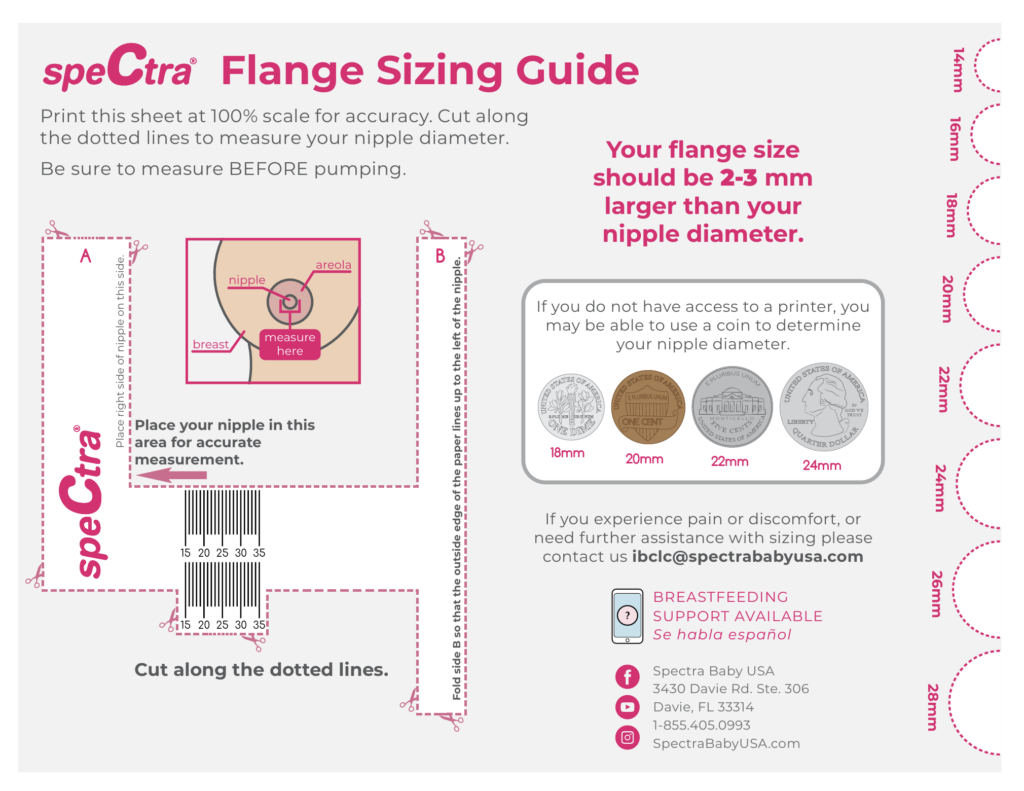
Why is a correct flange size so important? 1) It’ll ensure more milk secretion with less pain and discomfort (yes, please) 2) The cup will not damage the areola part of the breast that is filled with important sensors and ducts.
Please note your flange size may only be available to purchase online. The best way to go about it is to use the flange size guide provided in this article, jot down the number you get, go to the breast pump’s manufacturer’s website, and order a flange or two a la carte. I recommend getting this done before your baby arrives, to minimize unnecessary pain, complications and difficulties while breast pumping.
4. Nursing Pads and Breastmilk Storage Bags
Nursing pads are going to help prevent leakage of breastmilk on your clothes, especially in those early months of breastfeeding when your body is still getting to know your baby – figuring out how much milk to make.
While the storage bags are super handy to store any pumped milk you may need to refrigerate or freeze. You can add the Date and time you pumped, the name of the baby, and how many ounces were pumped.
For both of these items I love the Lansinoh brand, as well.
Buy Lansinoh nursing pads here. They are disposable and are readily available at Target for a leak emergency!
Buy Lansinoh breastmilk storage bags here.
Please note that these last four items mentioned above are all HSA/FSA eligible, so take full advantage of that if possible!
5. Nipple Cream
Oh, the ultimate life saver! You will be needing a good nipple ointment from day 1. In fact, I recommend taking a travel size Lansinoh nipple cream or an organic ointment for those first few latches after delivery. The hospital may also have nipple cream for you to keep.
Nipple cream is the best way to not only ease the pain of that newborn latch but it also hydrate the areolas, making them stronger for subsequent latches. They are also considered to be safe for baby.
The cleaner the ingredients in the ointment the better, but I have found that the bestseller Lansinoh Nipple Cream works great.
If you do prefer an organic option, Earth Mama Organic Nipple Butter is amazing as well.
6. Water Flask (minimum 32 oz.)
Now, before all the fancy gadgets and cute nursing covers, we need to make sure we are staying hydrated. When it comes to water intake, more is always better.
Breastmilk requires plenty of water to create this liquid gold. Our bodies can only use as much water as we provide it with. Therefore, drinking water throughout the day ensures your body has enough water to make breastmilk for your baby, to support your bodily functions, and for your postpartum recovery!
I recommend getting a water flask of 32 oz. to at least check off 1 liter of water per day. 2 liters at best.
Feel free to add a splash of lemon and a pink of salt for some natural electrolytes.
7. Prenatal Vitamins
Now that we’ve covered water as the basis of steady and healthy breastmilk supply, the next important component to breastmilk production is a good prenatal supplement. I personally love the FullWell brand. They are a unique prenatal company that aims to not only ensure momma is receiving the necessary nutrients, but they do extensive third-party testing on their products to provide the cleanest vitamins.
Find all of their pregnancy and postpartum supplements here.
8. Snacks
While in the subject of nutrition, having a stash of healthy snack options on hand will be vital to you and your baby’s health.
Breastfeeding burns a minimum of 700 calories. This mean you should be consuming way more than 700 calories in a day just to break even. This is a lot harder than it seems, given babies demand a lot of our attention and we may not be able to cook ourself a 2-3 course meal every four hours on the dot (been there).
Snacks will keep your nutrient stores intact and provide you with the necessary energy you need to breastfeed and care for your sweet baby.
9. Rest
When I was starting my breastfeeding journey four years ago, not once did I come across “rest” as one of the breastfeeding essentials.
I was certainly not warned just how much energy breastmilk production takes from our body to be able to keep up with a baby’s feeding and growth demands.
There will be moments in the day where you will feel extremely exhausted. The best thing I could recommend any breastfeeding momma out there is to listen to your body and take a moment to at least sit with your baby, if you can’t lay down for a nap, that is. Mental and physical rest can give you so much life back. Allow your body to slow down and find peace in the silence.
I get it. This is certainly easier said than done. Sitting down? In silence?? With a baby??? You may even have more kiddos to tend and who need your attention 100%, but even then I suggest you take at least a 10-20 minute break a day (at the very minimum!) to help support your body’s needs.
10. Nursing pillow
A good nursing pillow, like the Boppy pillow, is a go-to with newborns. Not only are they more comfortable to breastfeed with, but they also help us mommas with the various breastfeeding positions.
The pillows may be a bit bulky but will make the breastfeeding journey a more comfortable one.
I tried two different nursing pillows with my kids and that may be your case, too. Or perhaps you’ll find your perfect match and pass it along to your other children.
The awesome thing about these pillows, especially the Boppy brand is that once baby no longer uses the nursing pillow (they will sadly out-grow the pillow), you can use it as support for their back when learning how to sit and also for tummy time support as they learn to crawl.
Check out some Boppy pillow styles here.
11. Nursing Bras
Alright, let’s take a quick break from the technical and get into some fashion.
Without a doubt, a nice comfortable nursing bra can make ALL the difference. Not to mention, the easier the bra is to manipulate and make way for baby when nursing, the happier you will be (trust me).
Now there are A LOT of nursing bras on the market. Amazon is filled with them, however, I find that no two bra styles are the same and it will come down to preference and comfort.
Here are some of my favorites, but again, you will decide which ones are the most practical and most comfortable for you.
12. Nursing Blouses/Nursing Nightgowns
I will begin by saying I have a love-hate relationship with nursing blouses. I find the “peep hole” is never wide enough. Instead the baby get’s enveloped in cloth around the breast where I have to constantly readjust the peep hole so the baby can breathe.
This is not to say they are all a hassle, but it is definitely something I struggle with.
I do have some favorites and the majority of the nursing blouses and nursing dresses will be most affordable at Amazon. Ross also has some great nursing options for less, but just note different Ross locations will have different styles and availability.
I had found though, that crop tops work as a great alternative to nursing shirts, as well as, spaghetti tank tops. These are generally easy to pull down or up on the go and are, in my opinion, a bit more stylish.
In regards to nursing nightgowns… I LOVE THEM. They are quite comfortable, but most importantly, they make it so easy to nurse my baby at night.
Find some recommendations by clicking here and here!
13. Nursing Covers
There is nothing like a good nursing cover to safeguard you and your baby’s privacy when out in public or around other people at home.
There are different types of covers, from poncho covers to enlarged blankets. I personally prefer the poncho-style nursing cover when out in public, like when visiting an amusement park or the local zoo. You run less of a risk of your baby pulling down the cover and showing the world your goodies.
At home, however, a simple muslin blanket can go a long way and is relatively budget-friendly. Just like with the nursing bras and nursing blouses, though, you and your baby will find the cover that is the most comfortable and practical for you both.
Check out some Amazon nursing covers here.
14. Breast Cooling Pads/Heat Packs
One quick segway to self-care while nursing before finishing off this list of essentials is to have some sort of cool pack or heating pad for the breast area when needed. Fridamom has a wonderful collection of breast care products for breastfeeding mommas that I recommend. My personal favorite is their new Hydrogel Nipple Pad to help alleviate breast engorgement that tends to happen in the first few weeks of breastfeeding. Lansinoh also has some good breast care options for momma.
Don’t forget to add these items to your baby registry to ensure you’re stocked up before baby arrives!
These items are also HSA/FSA eligible.
15. Breastfeeding Course
If I could recommend ANYTHING in this article it would be to invest in a breastfeeding course. I went through a “Milk Supply” course around 5 months postpartum and it was life-changing. In fact, that is where I learned all about flange size I mentioned earlier in the article.
The course I took was on how to naturally increase milk supply, but there are a plethora of course options out there.
I recommend lactation consultant Alex Wachelka from Motherhood Blossoms Lactation. She has a number of breastfeeding courses from the prenatal stage to the weaning stage.
Click here for her Instagram account.
Click here for her website to enroll in one of her courses.
Another amazing resource is Bridget Teyler. She has a breastfeeding course on her website as well and a YouTube channel that I admittedly binge-watched while pregnant with my first.
Bridget Teyler’s Breastfeeding Course
Bridget Teyler’s YouTube Channel
Any one of these courses will set you up for success.
16. Your local lactation center.
Most insurances will have a team of lactation consultants and a local lactation center you can connect with during the first few months of your breastfeeding journey.
Booking an in-person appointment with a lactation consultant within your health insurance network will work beautifully with an online breastfeeding course.
I remember staying in close contact with my local lactation center and booked a couple of appointments with their lactation consultants when I had my first. he in-person appointments were one-on-one and so helpful. I remember still being shy about exposing my boobs out to breastfeed, but their professionalism and dedication to help with an effective latch helped me overcome that. I only had to go in a couple of times for guidance and follow-up, then was able to continue practicing their techniques at home.
I could not recommend this enough. It may provide you with extra support and a great opportunity to ask all the questions you may have.
All in all, this comprehensive list is to be a stepping stone to the world of breastfeeding. An experience that will be like no other in motherhood.
I hope this was helpful.
See you in the next one,
Lili